




The Denver Case: Why a Local US Warrant Can Lead to an Illegal Detention in Medellin.
Medellin has become a top destination for tourists, digital nomads and retirees. However, a recent legal development is sending shockwaves through the expat community. At our firm, we are currently analyzing a case—which we call “The Denver Case”—that exposes how the Colombian immigration system can be used to bypass your international legal rights.
The Reality of “Disguised Extradition”
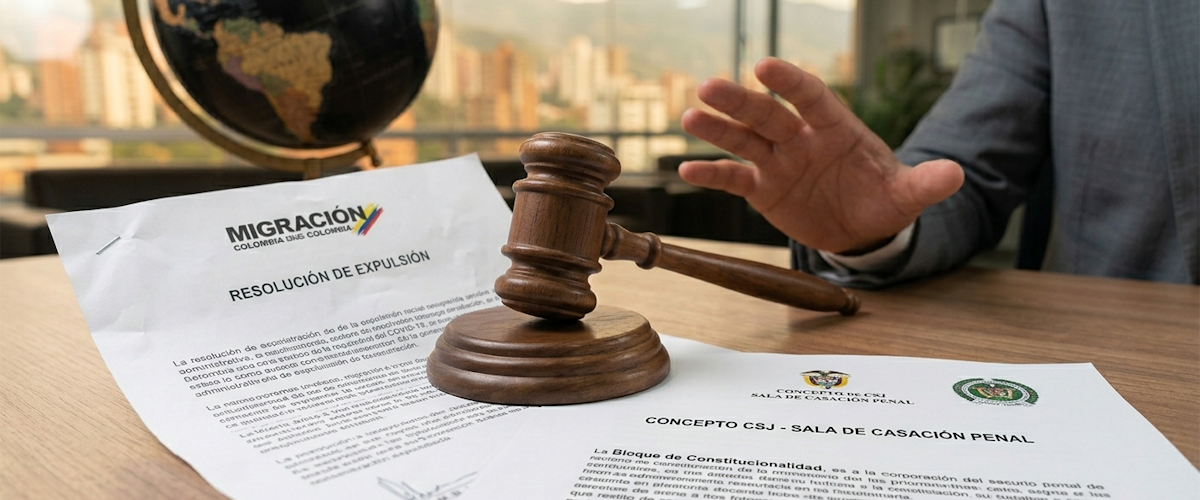
 In March 2026, a US citizen staying at a well-known hostel in El Poblado was approached by two immigration officers in blue shirts and khaki pants. He was detained and told he would be expelled to the United States within days. The reason? A local arrest warrant from Denver, Colorado.
Most travelers believe that unless there is an Interpol Red Notice, they are safe from international arrest. Although this is the way it should be in Colombia under the law, the “Denver Case” proves otherwise. It shows that Colombian immigration authorities are increasingly using “Administrative Expulsion” as a shortcut to hand people over to foreign authorities and US marshals without ever stepping foot in a courtroom.
The 36-Hour Rule: A Forgotten Protection
According to the Colombian Constitution (Article 28), no person—regardless of nationality—can be held for more than 36 hours without being brought before a judge. In the Denver Case, the citizen was held for over 120 hours in an immigration facility in Medellin.
During this time, he was denied the right to “self-deport” to a third country (like Ecuador, where he had a valid visa and the country he had traveled to Colombia from) and was instead forced into a commercial flight to Denver. By doing this, Migracion Colombia effectively acted as a delivery service for the US government and local state police, skipping the mandatory legal review by the Colombian Supreme Court.
Although in this case the warrant was issued for a serious crime and the information was all over social media, this is just the latest example. In our office we have seen this procedure take place with people who have issues in their hometowns with child support issues and other misdemeanor charges. In most cases, someones alerts the local authorities in the requesting state or country and the authorities contact Migracion Colombia directly to assist them.
Why This Matters to You
If you are facing a legal issue in your home country, even a non-violent or civil-related warrant, you are at risk of a “Disguised Extradition.” Here is why you need professional legal intervention immediately:
- The Trap of “Voluntary” Forms: Officers may ask you to sign documents stating you are being treated fairly. These are often used to waive your right to a Habeas Corpus or a formal extradition hearing.
- The Lack of Judicial Oversight: In administrative expulsions, there is no judge to check if the crime you are accused of is even a crime in Colombia (Double Criminality).
- Targeted Delivery: Migracion can choose to send you exactly where the prosecutors want you, even if you have legal residency in another country.
Our Defense Strategy
 In the Denver Case, we fought the detention through a Habeas Corpus petition. While the local courts are sometimes hesitant to rule against the administration, filing these actions is the only way to create a paper trail of the illegal detention and pressure the authorities to respect the 36-hour limit. This action forces the requesting authorities to follow the proper extradition through the Colombian judicial system.
Our firm specializes in Colombian and International Criminal Law. We understand that for an expat, a detention in a foreign country is a nightmare of confusion and language barriers. We provide the technical expertise to challenge the “Administrative Expulsion” and demand a fair trial under the Extradition Treaties.
Protect Your Freedom in Colombia
If you or someone you know is detained by Colombian immigration officers in Medellin, Bogota, Cartagena, Cali, Barranquilla, Valledupar or any region of Colombia, time is your most valuable asset. Do not sign any document, and demand to speak with an attorney who speaks your language and understands the intersection of Colombian constitutional law and US warrants.